
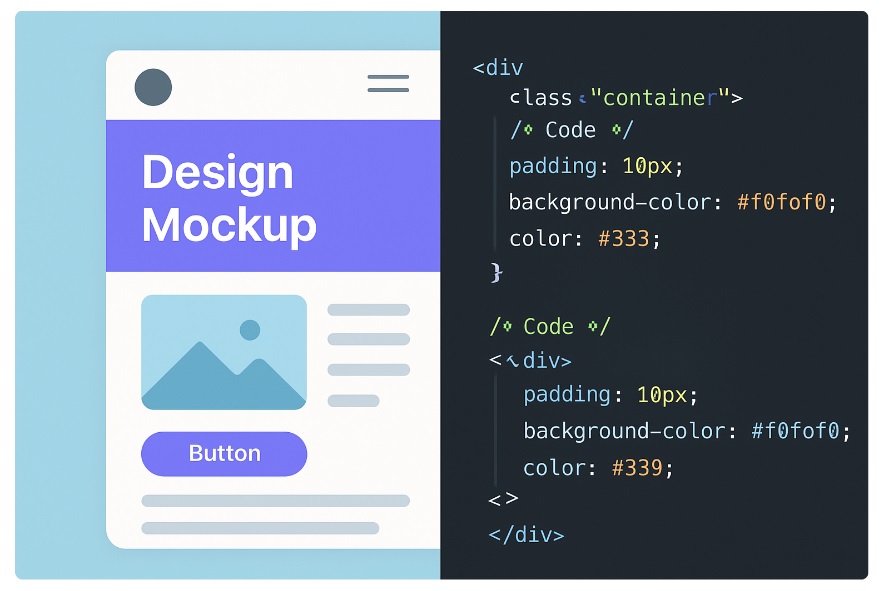
Introduction: Your Vision, Our Process, Unforgettable Digital Experiences
In today’s competitive digital landscape, a website is far more than just an online brochure; it’s a dynamic sales tool, a brand ambassador, and often the first point of contact between your business and its future customers.
But how do you transform a nascent idea into a high-performing, visually stunning, and conversion-driving digital asset?
The answer lies in a meticulously crafted web design process.
At Webdev-creations, with 8 years of experience in building digital solutions, our founder’s 17 years in graphic design and advertising, complemented by a decade in web design and development, we understand that every great website begins with a great process.
We don’t just build websites; we engineer digital experiences designed for your unique goals. Our client-centric approach ensures transparency, collaboration, and a seamless journey from concept to live website.
This post will take you behind the scenes, breaking down the step-by-step web design and development journey at Webdev-creations.
Phase 1: Discovery & Strategy ‒ Laying the Foundation
Every successful web project begins with a deep understanding of your business, goals, and audience. This initial phase sets the right direction and ensures the final product aligns perfectly with your objectives.
What Happens Here:
-
In-depth Consultation: Comprehensive discussions to understand your business model, target market, unique selling propositions, and long-term digital aspirations.
-
Goal Definition: We define SMART goals for your website, whether it’s lead generation, e-commerce sales, brand awareness, or information dissemination.
-
Audience Research: Analyzing demographics, psychographics, behaviors, and pain points to tailor design and content for maximum impact.
-
Competitor Analysis: Evaluating competitors’ online presence to identify strengths, weaknesses, and opportunities for your website.
-
Technology Stack Recommendation: Suggesting the most suitable platforms (WordPress, custom CMS, e-commerce platforms) based on requirements and budget.
-
Project Scope & Timeline: Clear deliverables, milestones, and realistic timelines to manage expectations.
Keywords: web design strategy, discovery phase, project planning, goal setting, audience research, competitor analysis, technology stack, project scope.
Phase 2: Planning & Structure ‒ Blueprinting Your Digital Home
With strategy in place, the next step is to translate insights into a concrete blueprint for your website. This phase focuses on defining site architecture and user flow.
What Happens Here:
-
Sitemap Creation: Outlines every page and its hierarchical relationship for clear navigation.
-
Wireframing: Low-fidelity wireframes focusing on layout, content placement, and functionality.
-
User Flow Mapping: Optimizing typical user journeys for seamless navigation and conversions.
-
Content Planning: Outlining text, images, videos, and interactive elements, including SEO considerations.
-
Technical Specifications: Detailed outline of functionalities, integrations, and backend requirements.
Keywords: sitemap, wireframing, UX, content planning, technical specifications, website architecture, user flow.
Phase 3: Design & Prototyping ‒ Bringing Your Brand to Life
This phase transforms strategy and wireframes into stunning, functional designs aligned with your brand identity.
What Happens Here:
-
Visual Design (UI): Crafting color palettes, typography, imagery, iconography, and overall aesthetics.
-
High-Fidelity Mockups: Pixel-perfect previews of key pages for precise feedback.
-
Interactive Prototypes: Clickable simulations for complex interactions.
-
Brand Integration: Seamless use of existing logos, style guides, or new branding elements.
-
Client Feedback & Revisions: Iterative design process to ensure your vision is fully realized.
Keywords: visual design, UI, mockups, prototypes, brand integration, graphic design, design feedback.
Phase 4: Development & Coding ‒ Building the Engine
Once designs are approved, our developers turn mockups into a functional, high-performing website.
What Happens Here:
-
Frontend Development: HTML5, CSS3, JavaScript frameworks like React or Vue.js for pixel-perfect implementation.
-
Backend Development: Server-side logic, databases, APIs using PHP, Python, Node.js, etc.
-
CMS Integration: WordPress or other CMS for easy content management.
-
Database Setup & Migration: Secure and efficient data storage.
-
Third-Party Integrations: Payment gateways, CRM, analytics, marketing tools.
-
SEO Best Practices: Clean URLs, meta tags, schema markup, and optimized images.
-
Version Control: Using Git to manage code and team collaboration.
Keywords: frontend, backend, CMS, WordPress, database, API, technical SEO, coding standards.
Phase 5: Testing & Quality Assurance ‒ Ensuring Flawless Performance
Before launch, every element is rigorously tested for optimal performance.
What Happens Here:
-
Functional Testing: Ensures all features work correctly.
-
Cross-Browser Compatibility: Chrome, Firefox, Safari, Edge.
-
Device Responsiveness: Desktop, tablet, and mobile testing.
-
Performance Optimization: Fast loading, image compression, code minification.
-
Security Testing: Protects sensitive data, e-commerce, and CMS.
-
Content Review & Proofreading: Checks accuracy, grammar, and consistency.
-
User Acceptance Testing (UAT): Client review and final feedback.
Keywords: website testing, QA, cross-browser, responsive testing, performance optimization, security, UAT.
Phase 6: Launch & Deployment ‒ Your Digital Debut
The moment your website goes live!
What Happens Here:
-
Server Configuration: Domains, SSL, hosting setup.
-
Final Content Upload: Text, images, and media.
-
Go-Live Checklist: Redirects, analytics, SEO, and functionality checks.
-
Website Migration: Smooth transition from old site, if applicable.
-
DNS Propagation: Domain pointing and smooth visitor access.
-
Post-Launch Monitoring: Performance, traffic, and user behavior analysis.
Keywords: website launch, deployment, server configuration, SSL, DNS propagation, migration, monitoring.
Phase 7: Post-Launch Support & Evolution ‒ Continuous Growth
Websites evolve with your business. We provide ongoing support and strategy.
What Happens Here:
-
Maintenance & Security: CMS, plugin, and theme updates, backups, security scans.
-
Performance Monitoring & Optimization: Speed, UX, SEO improvements.
-
Analytics & Reporting: KPI tracking, traffic, conversions, and behavior insights.
-
SEO Refinement & Content Strategy: Keyword updates, audits, and link building.
-
Feature Enhancements & Scalability: Implementing new features as business grows.
-
Strategic Consultation: Long-term digital partnership and guidance.
Keywords: maintenance, security, performance, analytics, SEO, content strategy, scalability, strategy.
Conclusion: Your Digital Success, Our Proven Path
The Webdev-creations process is more than steps—it’s a collaborative journey that transforms your digital aspirations into reality.
From concept to ongoing support, our client-centric approach, combined with expertise in web design, development, graphic design, and digital marketing, ensures your website is built for success and conversions.
With Webdev-creations, you’re not just getting a website; you’re gaining a dedicated digital partner committed to your growth.
Ready to embark on a web design journey that leads to unparalleled digital success?
Contact Webdev-creations today to discuss your project!
References
[1] VWO. (2025).
70+ Key Web Design Statistics for 2025. Retrieved from
https://vwo.com/blog/web-design-statistics/
[2] TechWyse. (2024).
How to Successfully Collaborate With Your Client on Their Website
Design. Retrieved from https://www.techwyse.com/blog/website-design/how-to-
successfully-collaborate-with-your-client-on-their-website-design
[3] The Digital Project Manager. (2025).
12 Digital Project Management Best Practices For
Project Success. Retrieved from https://thedigitalprojectmanager.com/personal/digital-
project-management-best-practices/